
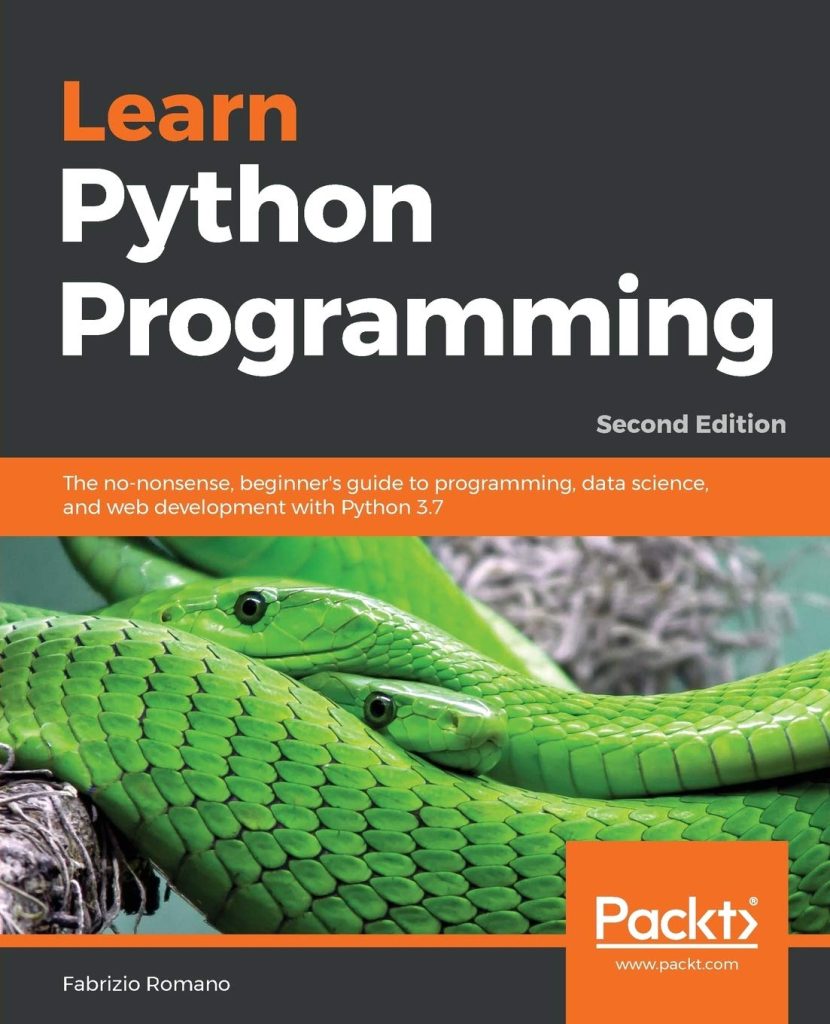
Have you ever wanted to learn programming but felt overwhelmed by the complexities surrounding it? If that sounds familiar, then “Learn Python Programming: The No-Nonsense, Beginner’s Guide to Programming, Data Science, and Web Development with Python 3.7, 2nd Edition” could be just what you need.

Overview of the Book
“Learn Python Programming” serves as a comprehensive guide to getting you started with Python. It’s a popular programming language known for its readability and versatility. This book is designed specifically for beginners and takes you through various aspects, including programming fundamentals, data science, and web development.
Who Is This Book For?
This book targets aspiring programmers, whether you’re a complete novice or someone with a bit of experience but looking to solidify your understanding of Python. The friendly tone and structured approach make it easier for you to grasp complex concepts.
Structure and Layout
The layout of “Learn Python Programming” makes it user-friendly. Each chapter is clear and concise, focusing on specific topics without overwhelming you with information.
Chapters Breakdown
Here’s a breakdown of the contents that you will encounter in the book:
| Chapter Number | Chapter Title | Main Focus |
|---|---|---|
| 1 | Introduction to Python | Basics of Python, setting up your environment |
| 2 | Data Types and Variables | Understanding data types, variable creation |
| 3 | Control Structures | Flow control, loops, conditional statements |
| 4 | Functions and Modules | Creating reusable code, importing modules |
| 5 | Data Structures | Lists, dictionaries, sets, tuples |
| 6 | File Handling | Reading and writing files |
| 7 | Error Handling and Exceptions | Managing errors gracefully |
| 8 | Introduction to Data Science | Basics of data analysis and libraries like pandas |
| 9 | Web Development Basics | Starting with web frameworks |
| 10 | Projects and Real-World Applications | Practical applications of learned concepts |

Learning Python Basics
One of the strongest features of this book is its focus on foundational concepts. The beginning chapters are designed to get you comfortable with the Python syntax.
Setting Up Your Environment
The author gives clear guidance on how to install Python and various Integrated Development Environments (IDEs). You’ll find step-by-step instructions to make this process as straightforward as possible.
Data Types and Variables
You will learn about different data types such as integers, floats, strings, and booleans. Sometimes, beginners overlook these basics, but the book emphasizes their importance and practical use.
This chapter also covers the concept of variables—essentially how to store your data for manipulation. The clear examples provided throughout make these topics much easier to understand.
Flow Control and Functions
As you progress, you’ll encounter control structures. This section explains how to use if statements, loops, and functions effectively, which is key to writing efficient code.
Conditionals and Loops
Learning about control structures allows you to make decisions in your code. You’ll discover how to manage different paths your code can take based on conditions, which adds a layer of complexity and capability to your programs.
Functions
Functions are one of the most critical parts of programming. The book breaks this concept down into easy-to-follow steps. You’ll learn how to define functions, pass parameters, and return values. This section emphasizes the importance of writing reusable code, promoting efficiency and organization.

Data Structures and File Handling
Understanding data structures is crucial for effective programming, and this book does an excellent job walking you through different types.
Lists, Dictionaries, Sets, and Tuples
In this section, you’ll discover the characteristics of various data structures. Each type is illustrated with practical examples, helping you grasp when to use one structure over another.
| Data Structure | Characteristics | When to Use |
|---|---|---|
| List | Ordered, mutable, and allows duplicates | To store a collection of items |
| Dictionary | Unordered, mutable, and key-value pairs | When you need to map a unique key to a value |
| Set | Unordered, mutable, no duplicates | To store unique items |
| Tuple | Ordered, immutable | When you want a fixed collection of items |
Reading and Writing Files
File handling is necessary for data persistence and this book dives into it seamlessly. You’ll learn how to read from and write to files, manage file paths, and deal with file formats like CSV.
The practical tasks you’ll find in this section allow you to understand real-world applications of Python.
Error Handling and Exception Management
One aspect many beginners often overlook is error handling. This book stresses that encountering errors is a part of programming, and knowing how to handle them is essential.
Understanding Exceptions
You’ll get a clear view of what exceptions are and how to manage them using try-except blocks. This knowledge can be incredibly beneficial, particularly in larger projects where bugs can be harder to trace.

Introduction to Data Science
Data science is one of the most exciting fields you can enter today, and Python is a preferred language for many data scientists.
Essential Libraries
The book introduces popular data science libraries such as NumPy and pandas, explaining how they are utilized for data analysis and manipulation. This foundational knowledge will prepare you for deeper explorations in data science.
Web Development Basics
Web development can seem daunting, but this book simplifies the process.
Web Framework Introduction
You’ll get an overview of web frameworks suitable for beginners, such as Flask. The book shows you how to create simple web applications, which can be exciting and rewarding.

Projects and Real-World Applications
All the concepts you’ve been learning about will culminate in the final chapters, which focus on projects.
Practical Application
The book lays out several projects with step-by-step instructions so you can see how your new skills can be applied in real-world scenarios. Creating a personal project helps consolidate your knowledge and gives you something tangible to show for your efforts.
| Project Title | Skills Learned | Tools and Technologies Used |
|---|---|---|
| Simple Calculator | Function creation, user input | Python standard library |
| Web App with Flask | Web development fundamentals | Flask, HTML/CSS |
| Data Analysis Project | Data handling and visualization | pandas, Matplotlib |
Writing Style and Tone
One of the most appealing aspects of “Learn Python Programming” is its friendly and approachable writing style. Instead of being filled with dense jargon, the author presents concepts in a relatable manner, making even complex topics more digestible for you.
Conclusion
If you’re looking to start your programming journey, “Learn Python Programming: The No-Nonsense, Beginner’s Guide to Programming, Data Science, and Web Development with Python 3.7, 2nd Edition” is a solid choice.
You’ll gain a well-rounded understanding of Python, along with practical skills you can apply across various fields. This book’s structured approach, clear explanations, and friendly tone make it an excellent resource that can guide you toward becoming proficient in programming.
Every chapter not only builds on the last but also encourages you to try coding yourself, making this a practical and interactive way to learn. Whether you’re aiming to break into data science, web development, or just want to learn how to code, you’re setting yourself up for success with this comprehensive guide.

Disclosure: As an Amazon Associate, I earn from qualifying purchases.