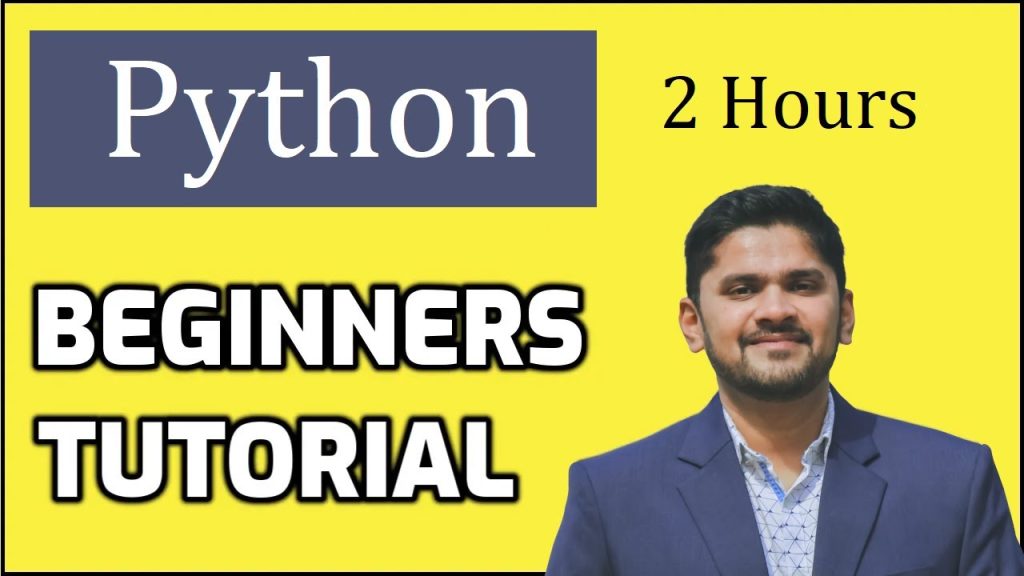
In just two hours, you can become familiar with Python, an essential programming language for your journey into the tech world. This tutorial led by Amit Thinks offers 20 engaging lessons filled with over 150 live examples, ensuring you get hands-on experience as you learn. From the basics, like installation and variables, to more advanced topics such as functions and classes, this course has got you covered.
You will explore various aspects of Python, including how to handle user input, work with data structures, and implement loops and decision-making statements. Whether you’re a complete beginner or looking to refresh your skills, this tutorial is perfect for enhancing your programming toolkit and boosting your confidence in Python.
Course Overview
Purpose of the Course
Welcome to your exciting journey to learn Python! The purpose of this course is to equip you with fundamental programming skills using Python, one of the most versatile and widely-used programming languages today. In just two hours, you’ll delve into introductory concepts, helping you build a strong foundation for further exploration. Whether you aspire to develop applications, analyze data, or automate tasks, this course is designed to get you started quickly and effectively.
Target Audience
This course is perfect for absolute beginners who have little to no programming experience. Whether you’re a student, a professional looking to upskill, or simply a curious learner, you will find value here. No prior coding knowledge is necessary; all you need is a willingness to learn and an open mind!
Course Structure and Format
The course comprises 20 engaging lessons that include over 150 live coding examples. Each lesson is designed to build upon the previous one, allowing you to gain practical experience as you learn. The format is straightforward, with a mix of theoretical explanations and hands-on exercises. By the end of the course, you will have a solid understanding of Python basics.
Getting Started with Python
Introduction to Python
Python is an incredibly popular programming language, celebrated for its simplicity and readability. It’s used in a wide range of applications, from web development to data science. During this section, you will learn about its features that make it suitable for both beginners and professionals alike. You’ll discover why Python is a great choice for your first programming language.
Installation and Setup
To get started with Python, the first step is to install it on your computer. You will learn how to download the latest version of Python from the official Python website. This section will guide you through the installation process for various operating systems, including Windows, macOS, and Linux. You’ll also discover how to verify that Python is installed correctly, ensuring a smooth start to your learning journey.
Setting Up the Python Environment
Once Python is installed, it’s important to set up your programming environment. You will be introduced to popular development tools and IDEs (Integrated Development Environments) like PyCharm, VS Code, and Jupyter Notebooks. Each option will come with step-by-step instructions to help you configure your environment to write and run Python code seamlessly.
Basic Python Concepts
Understanding Variables
Variables are a core concept in programming that you’re going to explore next. In this section, you’ll learn what variables are, how to create them, and why they are important for storing data. You will also see real examples to help you grasp how to use variables effectively in your Python programs.
Scope of Variables
Understanding the scope of variables is crucial as it defines where a variable is accessible within your code. Here, you will explore local and global scopes, giving you clarity on variable lifecycle and usage. This knowledge will enhance your ability to write organized and functional code.
Data Types and Type Conversion
Python supports several data types, including integers, floats, strings, and booleans. You’ll learn how to recognize and utilize these types effectively. Additionally, type conversion allows you to change one data type into another, which is vital for manipulating data correctly in your programs.
Operators in Python
Types of Operators
Operators are essential for performing operations on variables and values. You will be introduced to the different types of operators in Python, including arithmetic, comparison, logical, and assignment operators. Understanding these will empower you to manipulate data and control the flow of your programs.
Using Operators in Expressions
In this section, you’ll learn how to form expressions using operators. You will practice writing simple Python expressions and evaluating them, which involves combining variables and values to produce a result. This hands-on experience will enhance your comfort with using operators effectively.
Operator Precedence
Not all operators are created equal; some have priority over others. You will dive into operator precedence rules in Python, ensuring that you understand how complex expressions are evaluated. This knowledge is crucial for writing accurate and efficient code.
Python Comments and Best Practices
Types of Comments
Comments are an important part of programming, allowing you to document your code. In this section, you’ll discover the different types of comments in Python, how to write them, and the significance of using comments effectively to explain your code’s logic.
Importance of Commenting Code
Commenting your code is essential for clarity, especially when collaborating with others or revisiting your code after some time. You’ll learn why good comments can make your code more understandable and maintainable, preventing frustration down the line.
Best Practices for Writing Readable Code
Writing clean, readable code is a vital skill. This section will cover best practices for structuring and organizing your code, including naming conventions, code spacing, and organizing functions and variables. Following these practices will improve your coding proficiency as you advance.
User Input and Decision Making
Getting User Input
User input can make your programs interactive and dynamic. Here, you’ll learn how to use the input() function to capture user data. You’ll practice writing programs that respond to input, making your applications much more engaging.
Introduction to Decision Making Statements
Decision-making allows your code to respond differently based on conditions. You will be introduced to control statements in Python that enable decision-making, setting the stage for more complex logic in your programs.
Using If-Else Statements
In this section, you will learn how to use if-else statements to control the flow of your program based on conditions. You’ll gain practice writing conditional statements that help your program make decisions, which is fundamental for developing interactive applications.
Control Flow in Python
Understanding Loops
Loops allow you to execute a block of code multiple times, which is incredibly useful for automation. You will be introduced to different types of loops in Python: for and while loops. Understanding loops will be a significant step in enhancing your coding skill set.
Implementation of Break and Continue Statements
Within loops, sometimes you need to control their flow more precisely. You’ll learn how to use break to exit a loop when a condition is met, and continue to skip over the current iteration. These tools provide you with greater control in your programming.
Nested Loops
Nested loops are loops within loops, useful for working with two-dimensional data, such as matrices. You will learn how to implement nested loops effectively, expanding your ability to work with complex data structures.
Working with Data
Introduction to Numbers and Arithmetic Operations
You will explore how Python handles numbers and arithmetic operations, including addition, subtraction, multiplication, and division. This foundational knowledge is crucial for performing any calculations in your programs.
Strings: Basic Operations and Methods
Strings are a fundamental data type in Python. In this section, you will learn about basic string operations, including concatenation, slicing, and various string methods. Mastering strings will greatly enhance your ability to process and manipulate text data.
Introduction to Collections: Lists, Tuples, Sets, and Dictionaries
Collections are data structures that allow you to organize and manipulate multiple values. You will be introduced to four key types: lists, tuples, sets, and dictionaries. Understanding these collections will enable you to store, access, and manipulate data efficiently.
Functions in Python
Defining and Calling Functions
Functions are reusable blocks of code that perform a specific task. You will learn how to define your own functions, pass parameters, and return values. This encapsulation of code will help you keep your programs organized and efficient.
Understanding Lambda Functions
Lambda functions are small, anonymous functions defined with the lambda keyword. You’ll explore their use cases, particularly for short, throwaway functions, enhancing your ability to write concise and efficient code.
Scope and Lifetime of Variables in Functions
You will dive deeper into how variables behave within functions, focusing on variable scope and lifetime. Understanding these concepts will help you write cleaner, bug-free code and improve your programming logic.
Conclusion
Recap of Key Concepts
As we wrap up this course, it’s time to reflect on all the key concepts you’ve learned—from basic syntax and data types to functions and control flow. You’ll now have a foundational understanding of Python that you can build on as you continue your programming journey.
Future Learning Paths in Python
The world of Python programming is vast. You can explore advanced topics such as object-oriented programming, web development with frameworks like Django and Flask, or data science with libraries like Pandas and NumPy. The path is wide open for you to choose your next steps!
Encouragement to Practice and Explore
Finally, remember that practice is the key to mastering Python. Encourage yourself to write small programs, experiment with new ideas, and challenge yourself with projects! The more you code, the more comfortable you will become. Happy coding!
With this course, you’ve taken a significant step into the world of programming. Embrace the learning process and have fun along the way!