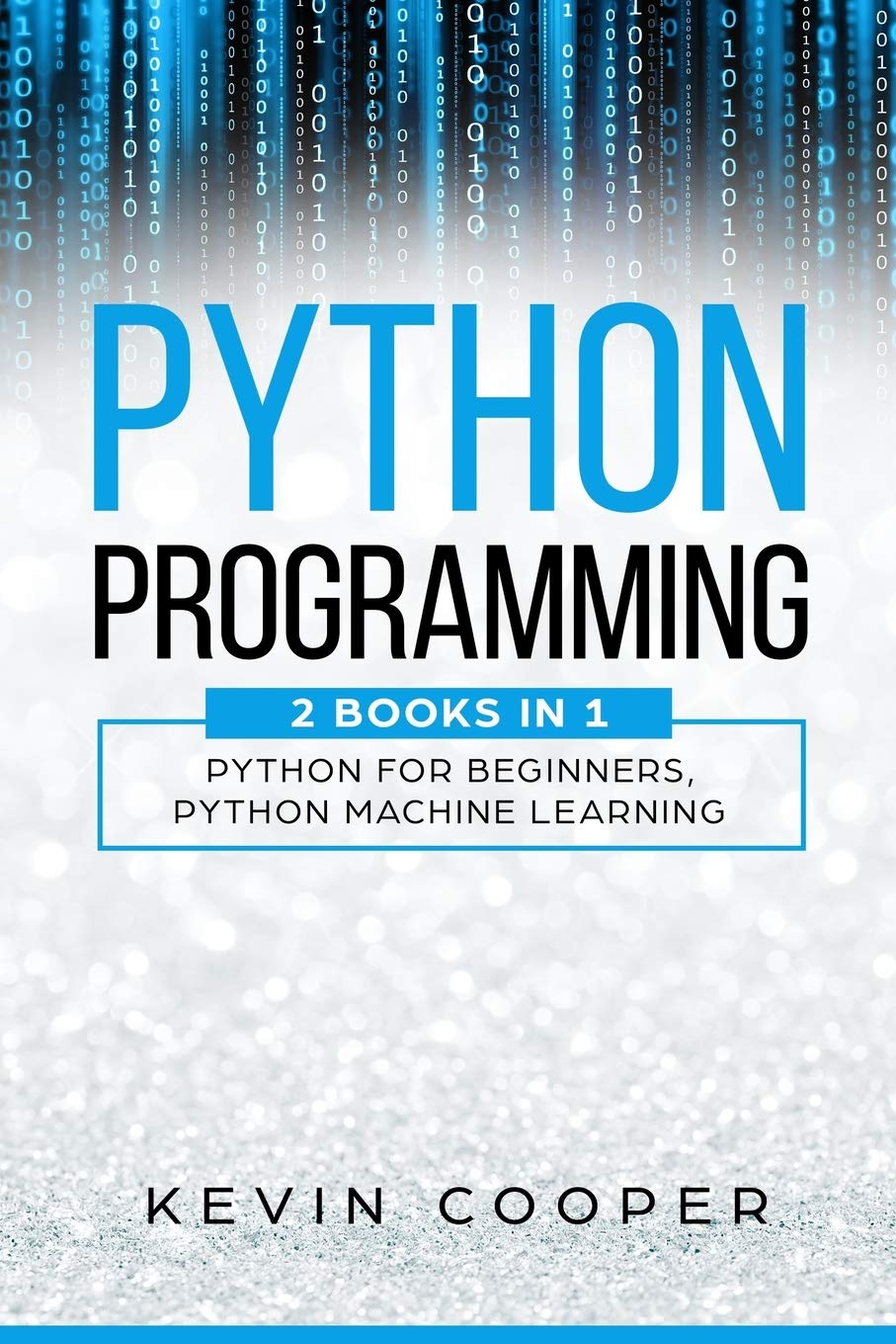
What if you could jumpstart your career and broaden your skill set with just two books in one?

Overview of Python Programming: 2 Books in 1
“Python Programming: 2 Books in 1: Python For Beginners & Machine Learning” is a beneficial resource that caters to both newcomers and seasoned programmers interested in machine learning. It unites foundational Python knowledge with advanced machine learning concepts, making it a highly efficient guide for anyone looking to gain a substantial understanding of programming in Python.
Why Python?
Python’s simplicity and versatility have made it one of the most popular programming languages today. Whether you are aiming to build web applications, analyze data, or delve into machine learning, Python provides a solid foundation. With easy-to-read syntax and a vast collection of libraries, learning Python opens numerous doors in various tech fields.

Book 1: Python For Beginners
Getting Started with Python
If you’re new to programming, this first book serves as a gentle introduction, focusing on the basics of Python. It guides you through the installation process, setting up your environment, and writing your first lines of code.
Fundamental Concepts
You will encounter essential concepts such as:
- Variables and Data Types: Learn how to store and manipulate data using different types.
- Control Structures: Understand how to create conditional statements and loops to control the flow of your program.
- Functions: Discover how to write reusable blocks of code, making your programs more efficient.
| Topic | Details |
|---|---|
| Variables | Containers for storing data. |
| Data Types | Types include integers, strings, lists, etc. |
| Control Structures | If statements, for loops, while loops. |
| Functions | Defined blocks of code for specific tasks. |
Technical Skills Development
In this book, the focus is not just on theory but on practical skills that enhance your programming knowledge. You’ll get to work on exercises and mini-projects that reinforce what you learned. This hands-on experience is key in understanding how to apply what you’ve studied.
Advanced Concepts
Once you’ve mastered the basics, you will gradually transition into more advanced topics, such as:
- Object-Oriented Programming (OOP): Understand how to model real-world problems using classes and objects.
- Error Handling: Learn how to manage errors gracefully in your programs.
- Modules and Libraries: Familiarize yourself with Python’s extensive standard library and how to incorporate third-party libraries.
Characterizing Your Learning Path
This approach to learning will build a solid foundation that will make transitioning into machine learning much smoother. You will feel more confident in your programming abilities and ready to tackle more complex problems.

Book 2: Machine Learning
Introduction to Machine Learning
The second book propels you into the exciting world of machine learning. With the foundational knowledge acquired from the first book, you’re in a prime position to grasp the concepts of machine learning effectively.
Understanding the Basics of Machine Learning
Here, you will learn what machine learning is, and its importance in today’s world. The book covers essential types of machine learning including supervised, unsupervised, and reinforcement learning, giving you a comprehensive understanding of how these approaches work.
| Type of Machine Learning | Description |
|---|---|
| Supervised | Learning with labeled data sets. |
| Unsupervised | Learning without labeled data; finding patterns. |
| Reinforcement | Learning by interacting with an environment. |
Practical Implementations
You won’t just read about concepts; you’ll also engage in practical implementations of machine learning algorithms. The book walks you through popular algorithms such as:
- Linear Regression: For predicting numerical values.
- Decision Trees: For classification tasks.
- Neural Networks: Understanding the architecture behind deep learning.
Tools and Libraries
An essential part of machine learning involves utilizing various tools and libraries that make your work easier. The book introduces you to:
- NumPy: For numerical computing and manipulating large datasets.
- Pandas: For data manipulation and analysis.
- Scikit-learn: A powerful library for implementing machine learning algorithms.
Project-Based Learning
This second book incorporates a project-based approach that allows you to develop real-world applications. By working on case studies and projects, you will start to see how machine learning can solve real problems, further enhancing your learning experience.
Challenges to Test Your Skills
To reinforce your learning, the book includes challenges and exercises that you can tackle once you feel ready. These will not only help you solidify your knowledge but will also provide practical experience in problem-solving using machine learning.

The Balance Between Theory and Practice
Both books feature a well-thought-out balance between theoretical insights and practical applications. This blend is essential in programming and machine learning. You’ll find that comprehending algorithms and concepts is just as important as knowing how to implement them.
Community and Resources
Another fantastic aspect of this guide is how it encourages you to engage with the broader Python community. The book provides links and references to online forums, tutorials, and additional resources that will enhance your learning experience.
Guidance for Future Learning
This two-book set not only equips you with knowledge but also encourages you to continue learning on your own. With tips on how to further your Python programming journey and insights into more advanced machine learning techniques, your path forward will feel clear.

Conclusion of the Set
Investing your time in “Python Programming: 2 Books in 1: Python For Beginners & Machine Learning” will pay off immensely. It is constructed to take you from basic programming concepts all the way into the complex realm of machine learning, all while promoting an interactive and engaging learning environment.
By the end, you will have a substantial toolkit at your disposal, ready to tackle whatever programming challenges come your way. Whether you’re aiming for a career in tech or just looking to broaden your skills, this comprehensive resource helps you lay a solid foundation for a bright future in programming and data science.

Disclosure: As an Amazon Associate, I earn from qualifying purchases.