
What if you could learn programming in a way that’s engaging and practical?
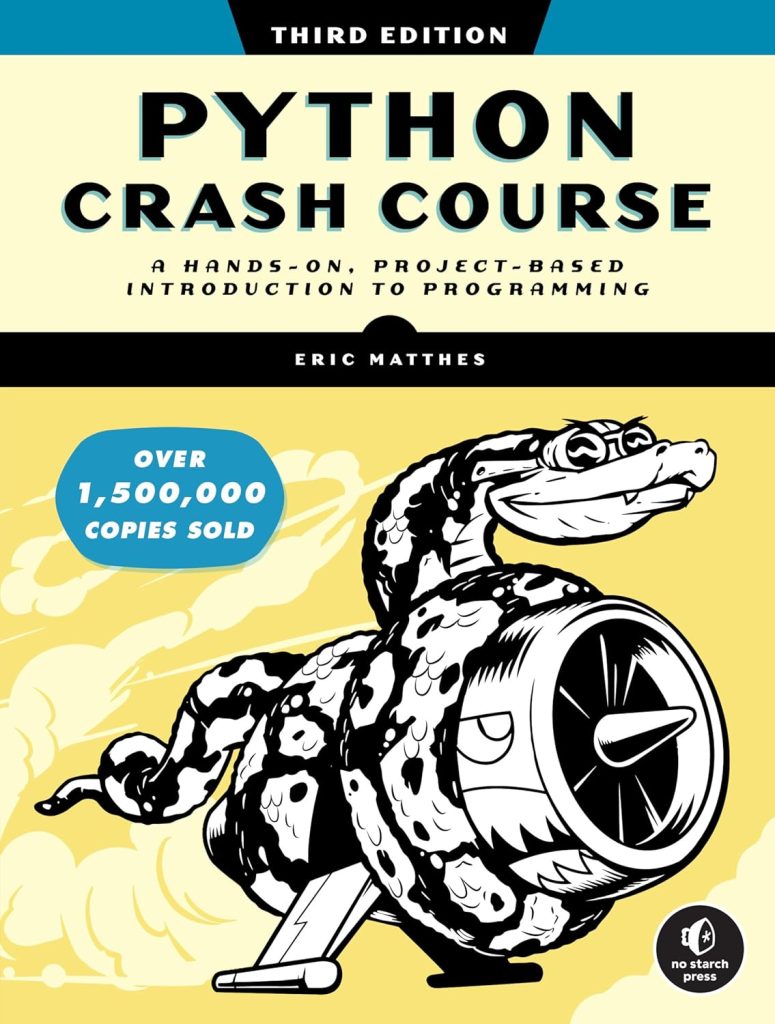

Overview of Python Crash Course, 3rd Edition
“Python Crash Course, 3rd Edition: A Hands-On, Project-Based Introduction to Programming” is your ticket to understanding Python, one of the most popular programming languages today. With a focus on hands-on projects, this book is tailored for newcomers who want to grasp the essentials of programming swiftly and effectively.
Who is This Book For?
This book is perfect for beginners—whether you’re a student, a professional looking to change careers, or just someone interested in coding. It’s suitable for readers with little to no prior programming experience. The conversational tone makes the content digestible and enjoyable.
Learning Style
The approach taken in this book is project-based. Instead of abstract concepts without context, each chapter includes projects that you can build right away. This hands-on methodology makes learning feel less daunting and much more engaging.

Key Features
| Feature | Description |
|---|---|
| Hands-On Projects | Build real-world applications throughout the book. |
| Clear Explanations | Concepts are explained simply, suitable for beginners. |
| Community Support | Access to online community for questions and feedback. |
| Updated Content | The 3rd edition includes the latest Python features. |
Hands-On Projects
You’ll engage in numerous projects that reinforce your understanding of Python. From creating simple games to web applications, you’ll witness your skills take shape quickly. Each project builds upon the previous ones, ensuring a solid foundation.
Clear Explanations
No more pulling your hair out over complex jargon. The author, Eric Matthes, has a knack for breaking down intricate topics. You’ll find that technical concepts are explained in a way that’s straightforward and relatable.
Community Support
As you work through the book, you can connect with others learning Python. This community support is invaluable. Feel free to ask questions, share your projects, and gain insights from fellow learners. You might even make some coding buddies along the way!
Updated Content
Staying current is essential in the tech world. This 3rd edition has been updated to incorporate the latest features of Python, making it a relevant and practical resource for your learning journey.
Chapter Breakdown
Each chapter in the book is thoughtfully structured to walk you through various facets of Python programming.
Chapter 1: Introduction to Programming
In this chapter, you’ll get a feel for programming and why Python is an excellent language to start with. Much emphasis is placed on understanding the basic building blocks.
Chapter 2: Variables and Simple Data Types
Here, you will learn about variables, strings, integers, and floats. You’ll gain a practical understanding of how to work with data through simple examples.
Chapter 3: Introducing Lists
Lists, an essential data structure in Python, are introduced here. You’ll learn how to create, modify, and manipulate lists—critical skills for any budding programmer.
Chapter 4: Working with Lists
In this chapter, you’ll discover more about list methods and how to loop through lists. You’ll apply these concepts in the project to reinforce your learning.
Chapter 5: If Statements
Conditional statements are vital for decision-making in your code. This chapter will teach you how to use if statements effectively, a skill that expands the capabilities of your programs.
Chapter 6: Dictionaries
Dictionaries allow you to store data in key-value pairs. Understanding dictionaries will help you manage and access your data efficiently.
Chapter 7: User Input and while Loops
User input is key for dynamic programs. This chapter covers how to accept and use input from users, making your programs interactive.
Chapter 8: Functions
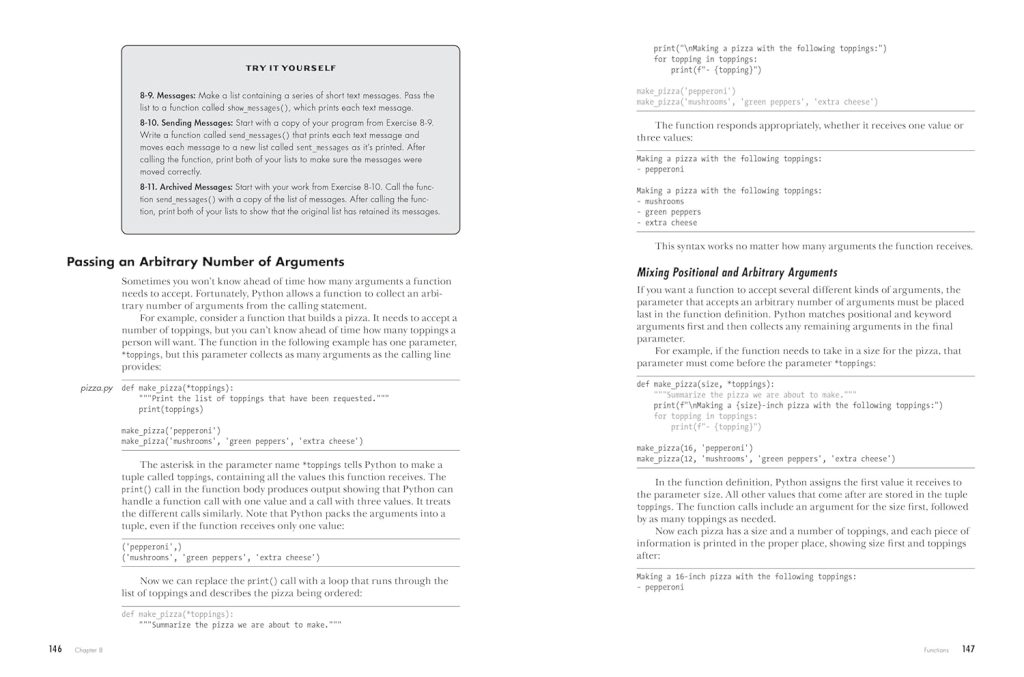
Functions enable you to package your code into reusable components. You’ll learn how to define and use functions, a fundamental skill in programming.
Chapter 9: Classes
Once you reach this chapter, you’ll delve into object-oriented programming concepts. You’ll learn about classes and instances, which are essential for building more complex applications.
Chapter 10: Files and Exceptions
When handling real-world applications, you’ll often work with files. This chapter teaches you how to read from and write to files, as well as how to handle exceptions gracefully.
Chapter 11: Testing Your Code
Quality assurance is crucial. You’ll learn how to test your code to ensure that it works as expected, catching bugs before they become a problem.
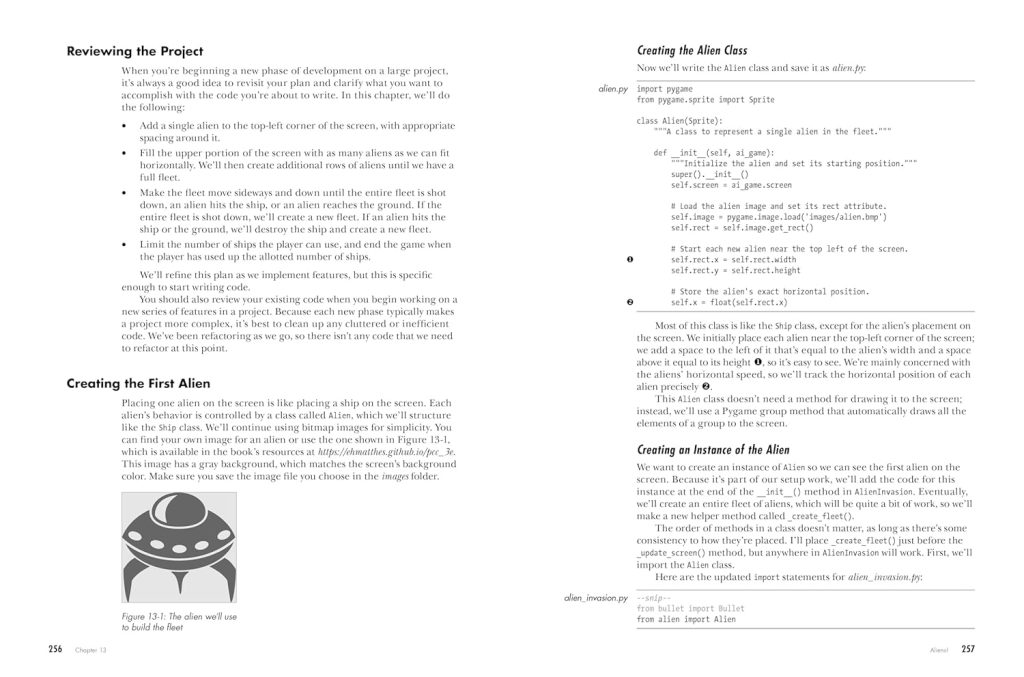
Chapter 12: Project: Alien Invasion
It’s time to bring everything together! In this project, you’ll build a complete game from the ground up, applying all the skills you’ve acquired throughout the book.
Pros and Cons
Pros
- Structured Learning Path: The logical progression of concepts helps you build your skills systematically.
- Engaging Projects: You won’t just read; you’ll create, which makes learning stick.
- User-Friendly: The conversational tone makes for a comfortable reading experience.
- Updated Content: The latest Python features ensure you’re learning relevant skills.
Cons
- Limited Advanced Topics: As it’s aimed at beginners, more advanced programming topics might not be covered in depth.
- Self-Discipline Required: Since the book is independent learning material, you’ll need self-motivation to work through it effectively.
Conclusion
Embracing the journey of learning Python can be as thrilling as it is challenging. With “Python Crash Course, 3rd Edition,” you’ll find a friendly companion by your side, guiding you through the twists and turns of programming. The project-based approach means you’ll leave the book not just with theoretical knowledge but with practical skills you can apply right away.
If you’re ready to start coding, this book could be just what you need to set you on the right path. Happy coding!

Disclosure: As an Amazon Associate, I earn from qualifying purchases.