
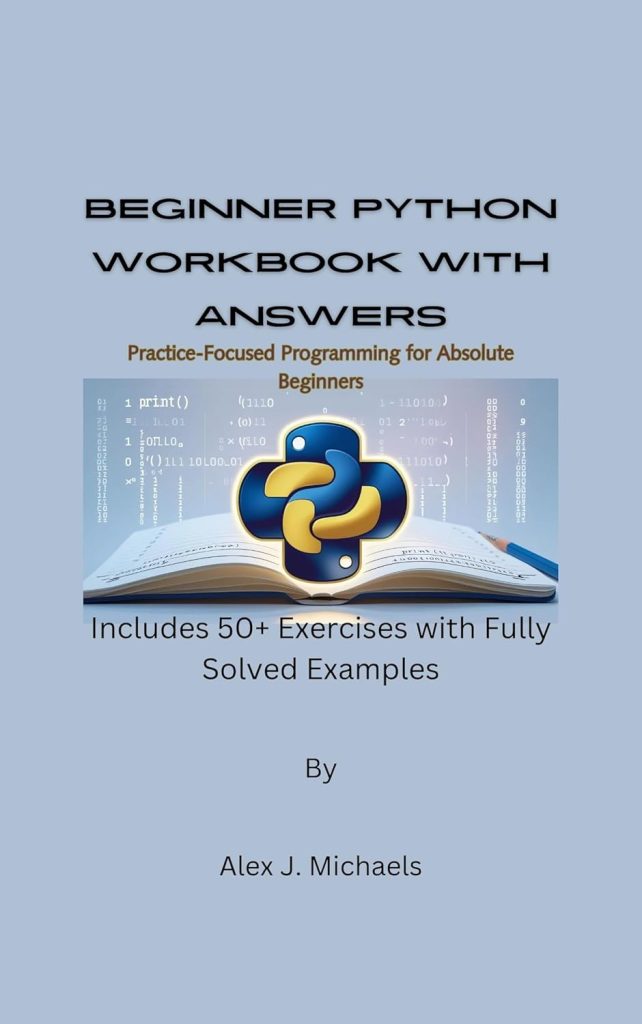
What do you think is holding you back from starting your programming journey? If you’ve ever thought about learning Python but felt overwhelmed or unsure where to begin, the “Beginner Python Workbook with Answers: Practice-Focused Programming for Absolute Beginners” could be just the resource you’re looking for. This workbook is designed to cater to individuals who are complete novices and helps you gradually build a solid foundation in Python programming—all while emphasizing practical exercises.

Overall Impression
The “Beginner Python Workbook with Answers” stands out for its practical approach to teaching Python. Instead of focusing solely on theory, it puts a significant emphasis on hands-on exercises that encourage you to practice what you learn immediately. This workbook is engaging and offers a friendly way to grasp the fundamentals without feeling intimidated.
Content Breakdown
The workbook includes a variety of modules covering essential topics from the basics to more intermediate concepts. Here’s a quick overview of what you might expect in terms of content:
| Module | Content Description |
|---|---|
| Introduction to Python | Overview of Python’s uses, installation steps, and basic syntax. |
| Control Structures | Detailed exercises on conditionals and loops. |
| Functions | How to create and utilize functions effectively. |
| Data Structures | Working with lists, tuples, dictionaries, and sets. |
| Modules and Libraries | Introduction to importing and using different libraries. |
| File Handling | Reading and writing files in Python. |
| Error Handling | Understanding exceptions and debugging tips. |
| Final Project | A capstone project that integrates all learned concepts. |
Each module is designed to progressively build your skills, allowing you to start from scratch and lead you through to competent Python programming by the end.
Practical Exercises
One of the most appealing features of this workbook is its emphasis on practice. The exercises are not merely theoretical; they push you to apply what you’ve learned right away. Each section contains a mix of simple and complex problems that challenge you to think critically and creatively.
Hands-on Problems
-
Basic Syntax: You’ll begin with exercises that allow you to write simple programs, making your first forays into Python. Expect to create basic scripts that get you comfortable with the syntax.
-
Control Flow: For control structures, you’ll work on problems that require you to make decisions—using
if,else, andelif—along with loop exercises that will have you repeating tasks efficiently. -
Function Creation: Once you’re comfortable, you’ll be expected to write your own functions, which is essential for avoiding code duplication and making your programs more modular.
Answer Key for Self-Assessment
What truly sets this workbook apart is the answer key provided at the end. After you finish each exercise, you can check your answers against the solutions to ensure you’re on the right track. This feature is incredibly beneficial for beginners trying to self-learn, as it allows you to reflect on your mistakes and understand how to improve.

Accessibility for Beginners
The workbook is written in clear, concise language, making it easy to digest. Each concept is broken down into manageable sections, preventing you from feeling overwhelmed. You’re guided through difficult topics with patience, ensuring that all learners, regardless of background, can grasp the material.
Formatting and Design
The layout is friendly and inviting, featuring clear headings and lots of white space. Each section is visually distinct, which helps in digesting information without feeling cluttered. The design encourages you to keep flipping the pages, feeling motivated to reach the end of each module.
Additional Resources
In addition to the workbook itself, the authors provide supplementary resources. Whether you’d like to follow along with instructional videos or seek out online communities for additional support, the workbook points you in the right direction.
Suggested Online Communities
Engaging with fellow learners can enhance your understanding and keep you motivated. Here are a couple of community suggestions that you might consider:
- Stack Overflow: A great platform for asking questions and learning from solutions.
- Reddit – r/learnpython: An online forum where you can find resources, ask questions, or even share your practice projects.

Progress Tracking
To keep you motivated, the workbook encourages you to set small, achievable goals. You can track your progress through checklists present at the end of each module. This method promotes accountability and helps nurture a consistent study habit, which is essential when learning programming.
Personal Achievement
When you complete each section, take a moment to celebrate that achievement. It may seem small, but acknowledging your progress can be a fantastic motivational tool as you continue through the workbook.
Final Project
Hands-On Learning
At the end of the workbook, there’s a final project that encapsulates all the skills and knowledge acquired throughout your learning process. This project allows you to apply different concepts together, reinforcing the holistic understanding of Python programming.
Application of Knowledge
This isn’t just an assignment; it’s a comprehensive look at everything you’ve learned. You get to create something meaningful, reinforcing your skills and giving you a sense of accomplishment.

Pros and Cons
The “Beginner Python Workbook with Answers” has several advantages, but like any learning material, it has its drawbacks too. Let’s break down the pros and cons to give you a clearer picture.
Pros
- User-Friendly: The workbook is designed specifically for beginners, using straightforward language and examples.
- Hands-On Approach: Exercises are abundant and practical, reinforcing hands-on learning.
- Immediate Feedback: The answer key allows for quick self-assessment.
- Structured Layout: Information flows logically, making it easier for you to follow.
- Motivational Features: Progress tracking encourages accountability and consistent study habits.
Cons
- Limited Depth: Although it offers a great introduction, some advanced topics are not covered in detail.
- Self-Driven: Requires self-discipline to complete the exercises and maintain regular study sessions.
- No Interactive Features: Being a workbook, it’s not interactive like some other online resources.
Overall, the pros significantly outweigh the cons, especially for absolute beginners looking for a solid starting point.
Value for Money
When considering books or workbooks, pricing often comes to mind. The “Beginner Python Workbook with Answers” provides great value for the investment. With extensive practice materials, quizzes, and a final project, it serves as more than just a resource; it’s an educational experience packed into one volume.
Price Justification
Given the amount of content, the user-friendly approach, and the nature of hands-on learning, the price set for this workbook is reasonable. You’re not just purchasing a book; you’re investing in your future programming skills, which can yield immense returns.

Conclusion
If programming has been a curiosity for you but has felt out of reach, the “Beginner Python Workbook with Answers” is a fantastic starting point. The workbook’s practical focus ensures that you won’t just read about Python—you will practice it. Engaging exercises, an approachable writing style, and the provision of answers for self-checking make this workbook an ideal companion for your coding journey.
By the end of this workbook, you could find yourself creating projects that you can show off to friends or even using your skills in the workplace. Python is a versatile language, and with a solid foundation built through this workbook, you will be on the right path toward a rewarding skill set in programming.
Remember, every expert was once a beginner. Don’t let doubt hold you back. Embrace the adventure of learning Python!

Disclosure: As an Amazon Associate, I earn from qualifying purchases.