
Curious about how to use Python lambda functions? This article explores these unique features of Python, known for their simplicity and efficiency in coding. You’ll learn what lambda functions are, often called anonymous functions, and how they can streamline your programming workflow.
The focus will be on the basics, providing you with a clear understanding of what lambda functions can do and how they fit into your coding toolbox. Get ready to enhance your Python skills and make your coding experience even more enjoyable!
Understanding Lambda Functions
Definition of Lambda Functions
Lambda functions are small, anonymous functions that can be created using the lambda keyword in Python. Unlike standard functions defined using the def keyword, lambda functions are generally limited to a single expression. They are often used for short, throwaway functions where you do not want to formally define a function. For instance, if you need a quick function to multiply two numbers, you can create a lambda function without worrying about defining it with a name.
Comparison with Regular Functions
While regular functions are well-suited for complex operations and can include multiple lines of code, lambda functions shine in simplicity and brevity. A regular function might look quite verbose for a simple task, while a lambda can express the same logic in just a single line. However, due to this simplicity, lambda functions are not suitable for every situation, especially when the logic becomes intricate. You might want to consider using a regular function if you need to implement various statements, such as error handling or comments.
Use Cases for Lambda Functions
Lambda functions are often utilized in scenarios where small, quick functions are required, such as sorting lists, filtering data, or mapping values. For instance, when processing collections, lambda functions serve as a convenient way to write functions without formally declaring them. They’re perfect for functional programming tasks, particularly in conjunction with higher-order functions.
Syntax of Lambda Functions
Basic Syntax Explanation
The syntax for creating a lambda function is straightforward. It follows the structure:
lambda arguments: expression
In this structure, arguments can be one or more variables, and expression is a single expression that is evaluated and returned. This simplicity makes lambdas particularly appealing for quick operations.
Parameters and Return Statement
In a lambda function, the parameters are defined just like they would be in a traditional function. However, unlike standard functions, there’s no need for an explicit return statement since the lambda function automatically returns the result of the expression. This characteristic helps streamline coding practices.
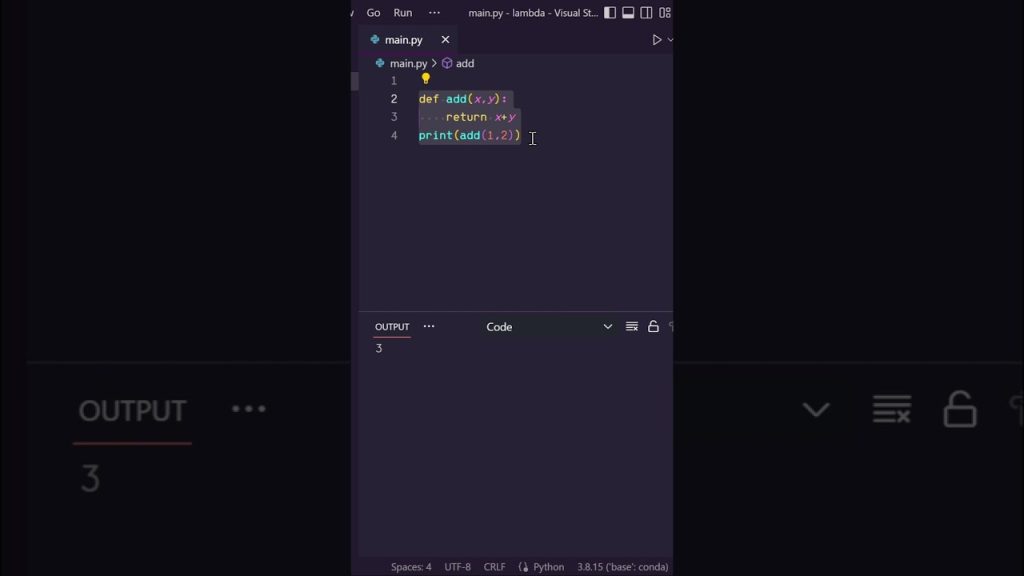
Example of a Simple Lambda Function
Here’s a simple example of a lambda function:
square = lambda x: x ** 2 print(square(5)) # Output: 25
In this example, you define a lambda function that takes an argument x and returns the square of x. As you can see, it’s concise and effective for such a simple operation.
Where to Use Lambda Functions
In Higher Order Functions
Higher-order functions are those that can take other functions as arguments or return them. Lambda functions fit perfectly in this context. For instance, when using the map(), filter(), or reduce() functions, you can pass a lambda as an argument to perform operations on each element of a collection.
With Map Function
The map() function applies a given function to all items in a list (or any iterable). Using lambda functions here can be a time-saver. Consider the following example:
numbers = [1, 2, 3, 4] squared = list(map(lambda x: x ** 2, numbers)) print(squared) # Output: [1, 4, 9, 16]
In this example, the lambda function squares each number in the numbers list.
With Filter Function
The filter() function constructs an iterator from elements of an iterable for which a function returns true. Lambda functions can simplify the process:
numbers = [1, 2, 3, 4] even_numbers = list(filter(lambda x: x % 2 == 0, numbers)) print(even_numbers) # Output: [2, 4]
In this case, the lambda function filters out only the even numbers.
With Reduce Function
The reduce() function from the functools module takes an iterable and applies a binary function cumulatively to its items. Lambda’s concise nature becomes helpful here:
from functools import reduce result = reduce(lambda x, y: x + y, [1, 2, 3, 4]) print(result) # Output: 10
In this example, the lambda function adds the numbers together.
Advantages of Lambda Functions

Conciseness and Quick Declaration
One of the principal advantages of lambda functions is their brevity. When you need to declare a simple function quickly, lambdas allow you to do so without the overhead of using def. This can significantly reduce the amount of code you write.
Improved Readability in Certain Contexts
For simple operations, using a lambda function can enhance the readability of your code. Rather than distracting from the main logic of your code with multiple function declarations, a lambda can make the intent clear at a glance. However, this readability boost is subject to complexity.
Functionality without Naming Overhead
Lambda functions allow you to define functions without binding them to a name. This is beneficial in many situations, particularly when passing functions as arguments. You can create a concise and self-contained function that operates for a single purpose without cluttering your namespace.
Limitations of Lambda Functions
Single Expression Limitation
One significant limitation of lambda functions is that they are restricted to a single expression. This means you can’t implement complex functions that require multiple statements or multi-line logic. If your function involves conditionals, loops, or substantial logic, you should consider using a standard function instead.
Readability Issues with Complex Logic
While lambda functions can enhance readability for straightforward operations, they can quickly become difficult to read if the logic gets convoluted. As your expressions grow in complexity, understanding the lambda can become a challenge. In such cases, it’s often better to define a regular function for clarity.

Error Handling Considerations
Lambda functions do not have the built-in mechanisms for error handling that regular functions do. Because they’re meant for simple expressions, if any error arises, it can make debugging difficult. It’s advisable to use named functions if you need to manage exceptions effectively.
Examples of Lambda Functions in Practice
Using Lambda Functions for Sorting
A common use case for lambda functions is sorting sequences. When using the sorted() function, you can utilize a lambda to specify a custom sort order:
points = [(3, 4), (1, 2), (5, 1)] sorted_points = sorted(points, key=lambda point: point[0]) print(sorted_points) # Output: [(1, 2), (3, 4), (5, 1)]
In this code, the list of tuples is sorted based on the first element of each tuple.
Creating Custom Functions
You can also use lambdas to build small custom functions on the fly. For example:
add = lambda x, y: x + y print(add(3, 5)) # Output: 8
This shows how easily you can create a function for addition without a formal definition.
Combining Lambda with Other Functions
You can effectively combine lambda functions with other higher-order functions to create powerful, succinct operations:
data = [1, 2, 3, 4] processed = map(lambda x: x * 3, filter(lambda x: x % 2 == 0, data)) print(list(processed)) # Output: [6, 12]
This example filters out even numbers and then multiplies each by 3 using nested lambdas.
Common Pitfalls When Using Lambda Functions
Overusing Lambda Functions
One common pitfall is overusing lambda functions to the point where you compromise clarity. While they can speed up function creation, relying on them excessively may lead to code that is difficult to follow, especially for others who read your code later.
Misunderstanding Scope
Lambdas can sometimes lead to confusion around variable scope, especially within loops. If you’re not careful, you may unintentionally bind the function to the last value of the loop. Always be cautious when working with lambdas in such scenarios.
Lambda Functions Inside Loops
Creating lambda functions inside loops can also yield unexpected results due to late binding behavior. It is crucial to remember that the lambda will capture the variable rather than its value at the time of declaration. If you need a lambda that refers to the current loop value at each iteration, consider using default arguments.
Lambda Functions vs Named Functions
Performance Comparison
In general, lambda functions do not outperform named functions regarding speed. The primary advantage lies in conciseness and ease of writing rather than execution speed. If the difference in performance is marginal, focus on more essential factors like readability and intent.
Readability Comparison
Named functions typically provide better readability, especially for complex functionalities. If a function does more than a simple operation or requires extensive documentation, a named function is often the best choice.
Choosing the Right Function Type
The decision between using a lambda function and a named function depends on the context. For simple, short-lived operations, lambdas are ideal, while named functions are preferred when clarity and complexity rise. Always assess your function’s purpose to determine which is more fitting.
Real World Applications of Lambda Functions
Data Processing and Analysis
Lambda functions are widely used in data processing and analysis workflows. They help clean, transform, and manipulate datasets with minimal code, allowing analysts to focus on the actual data rather than complex function definitions.
Web Development
In web development, lambda functions can be utilized in routing or setting up endpoints where quick logic is necessary. Frameworks like Flask allow the use of lambda functions in defining request handlers for minimalistic operations.
Machine Learning Preprocessing
Lambda functions find applications in machine learning preprocessing steps, such as normalizing data or transforming features quickly. The combination of lambda with map and filter allows developers to write concise preprocessing scripts that can handle large datasets efficiently.
Conclusion
Summary of Key Points
Lambda functions are a powerful feature in Python, allowing you to create anonymous functions quickly and easily. They excel in scenarios involving higher-order functions like map, filter, and reduce. However, it’s critical to recognize their limitations, particularly in complexity and error handling.
Encouragement to Experiment
As you become more familiar with lambda functions, don’t hesitate to experiment with them in your coding projects. They can often simplify your code and make your logic easier to understand, especially in functional programming contexts.
Final Thoughts on Using Lambda Functions
Lambda functions are a nifty tool in your programming toolbox. Just like any tool, the effectiveness of lambda functions lies in proper usage. Understanding when and how to deploy them can significantly enhance your programming capabilities, so keep practicing and exploring this flexible feature in Python! Happy coding!