
Have you ever found yourself intrigued by programming but not sure where to start? Python is one of the most user-friendly programming languages out there, and “Python in 5 Pages: A Lightning Guide to Python Programming” is designed to help you get your feet wet in no time.
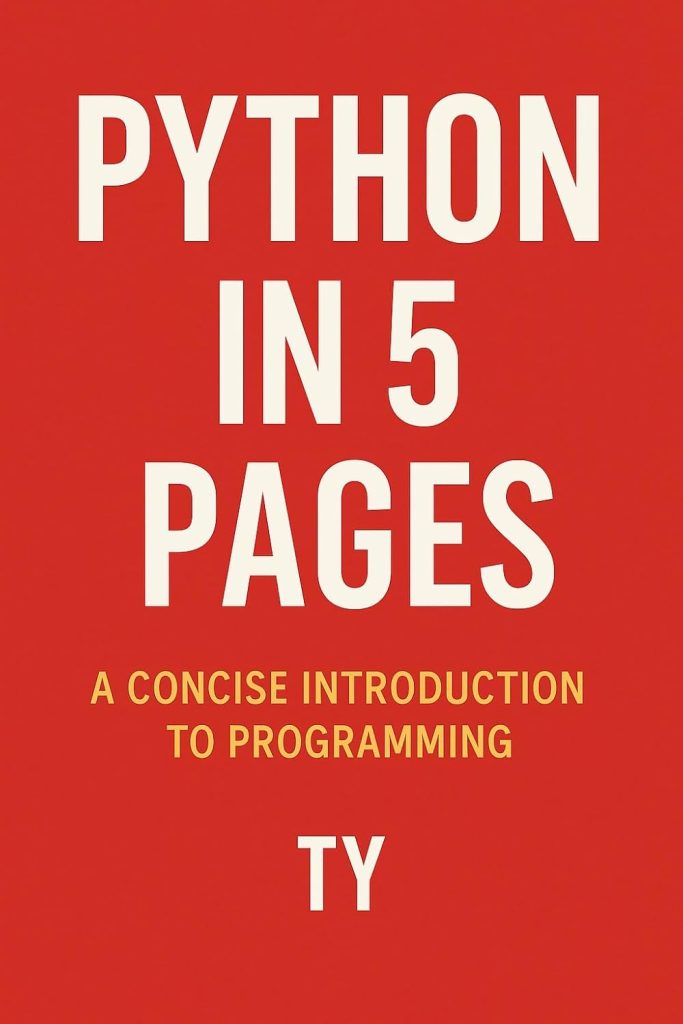

Overview of the Product
“Python in 5 Pages” is not your traditional thick textbook filled with jargon and complex terminology. This Kindle Edition is designed for individuals who want a straightforward, concise introduction to Python programming. The 5-page format makes it easy to absorb information quickly, ideal for busy learners.
Who Is It For?
This guide is perfect for beginners who are curious about coding. If you’re a student, a professional looking to switch fields, or simply interested in technology, this book caters to all levels. It breaks down complex concepts into digestible pieces, making programming accessible and enjoyable.
Content Breakdown
Here’s a quick overview of what you can expect from each section of the guide:
| Page | Content Focus | Key Points |
|---|---|---|
| 1 | Introduction to Python | History, Features, Installation |
| 2 | Basic Syntax and Operations | Variables, Data Types, Basic Operations |
| 3 | Control Structures | Conditional Statements, Loops |
| 4 | Functions and Modules | Defining Functions, Importing Modules |
| 5 | Practical Examples | Simple Projects, Resources for Further Learning |
Page 1: Introduction to Python
Understanding where Python comes from sets the foundation for your learning. This page explains the history of Python, its versatility, and why it stands out among programming languages.
Python was created by Guido van Rossum and first released in 1991. It emphasizes readability and simplicity, making it an excellent choice for beginners. The installation process is also straightforward, whether on Windows or macOS, and the guide provides clear instructions to help you get started.
Page 2: Basic Syntax and Operations
After setting the stage, you’ll dive into Python’s basic syntax and operations. This section focuses on variables, data types, and some of the most common operations you will use in your programming journey.
You’ll learn how to declare variables, recognize common data types like strings and integers, and perform simple operations such as addition, subtraction, and string concatenation. Each concept is explained in easy-to-understand terms.
Page 3: Control Structures
Control structures are essential for handling the flow of your programs. This page gives you a thorough introduction to conditional statements (like if-else) and loops (for and while).
Control structures allow you to make decisions in your code and repeat actions, both of which are critical components of dynamic programming. You’ll gain insights into how these structures influence your program’s behavior, which can help in creating robust applications.
Page 4: Functions and Modules
Functions break your code into smaller, manageable sections, while modules enable you to reuse code across projects. This section provides you with the knowledge you need to define your functions and understand how to import existing modules to save time.
The guide contains simple examples that illustrate these concepts, so you can get hands-on experience right from the get-go. You’ll realize how much more organized your code can become once you start using functions and modules effectively.
Page 5: Practical Examples
To wrap it all up, the final page offers practical examples that can help cement your knowledge. This is where you can bring everything you’ve learned into real-world applications.
You’ll find sample projects like a simple calculator or a basic game, which are perfect for applying your skills. This hands-on approach promotes active learning, allowing you to understand Python in a more interactive way.

Why This Guide Stands Out
Conciseness and Clarity
One of the most appealing aspects of “Python in 5 Pages” is its conciseness. Each page is focused and to the point, making it easy to follow along without feeling overwhelmed. This is especially beneficial for visual learners who prefer clear outlines without unnecessary fluff.
Friendly Tone
The guide is written in a friendly, conversational tone, which makes the learning process enjoyable. It feels less like a textbook and more like a chat with a knowledgeable friend who’s eager to share their insights. This encouraging voice can make a significant difference in keeping you motivated.
Step-By-Step Instructions
Each section provides step-by-step instructions, complete with examples that reinforce the concepts being introduced. This method of teaching ensures that you not only learn theoretical aspects but also apply them practically. You’ll find this hands-on approach complements theoretical learning perfectly.
Benefits of Python
Versatile and All-Encompassing
Python’s versatility makes it applicable in various fields such as web development, data analysis, artificial intelligence, scientific computing, and more. As you pick up Python, you’ll find various paths that you can follow, depending on your interests.
Easy to Learn, Easy to Use
With its simple syntax and readability, Python is often recommended for beginners and has a strong community support system. Numerous online forums, tutorials, and resources are available to troubleshoot any issues you may encounter.

Challenges You May Encounter
It’s important to note that while learning Python can be enjoyable, it’s not without challenges. You may find yourself grappling with certain concepts at first. This is perfectly normal, and the guide encourages patience and persistence.
Common Pitfalls
Some common pitfalls that beginners face include misunderstanding the difference between data types, improper use of indentation, and debugging errors in code. But don’t be discouraged! Each of these challenges is a stepping stone toward becoming proficient in Python.
Additional Resources
Once you finish “Python in 5 Pages,” you may find yourself wanting more. Many additional resources can help you continue your Python journey:
- Online Courses: Websites like Coursera, Udemy, and Codecademy offer structured courses with hands-on projects.
- YouTube Channels: Channels like Corey Schafer and freeCodeCamp provide visual learners with helpful tutorials.
- Books: If you want to go deeper, you can explore more comprehensive Python texts like “Automate the Boring Stuff with Python.”
Community Support
Joining online communities, such as Python subreddit threads or Stack Overflow, can be incredibly beneficial. Engaging with others on platforms like GitHub offers a chance to see real-world applications of Python code and connect with peers.
Final Thoughts
“Python in 5 Pages: A Lightning Guide to Python Programming” is an excellent starting point for anyone interested in learning this dynamic language. Its simplicity, clarity, and friendly tone make it engaging and easy to absorb, which is essential in a subject that can often feel daunting.
Equipped with this guide and a little perseverance, you’ll be well on your way to becoming proficient in Python. Each challenge and project you undertake will not only boost your coding skills but also open doors to a whole new world of possibilities.
So, are you ready to embark on your Python programming journey? With the right mindset and tools, you can achieve remarkable things. Happy coding!

Disclosure: As an Amazon Associate, I earn from qualifying purchases.